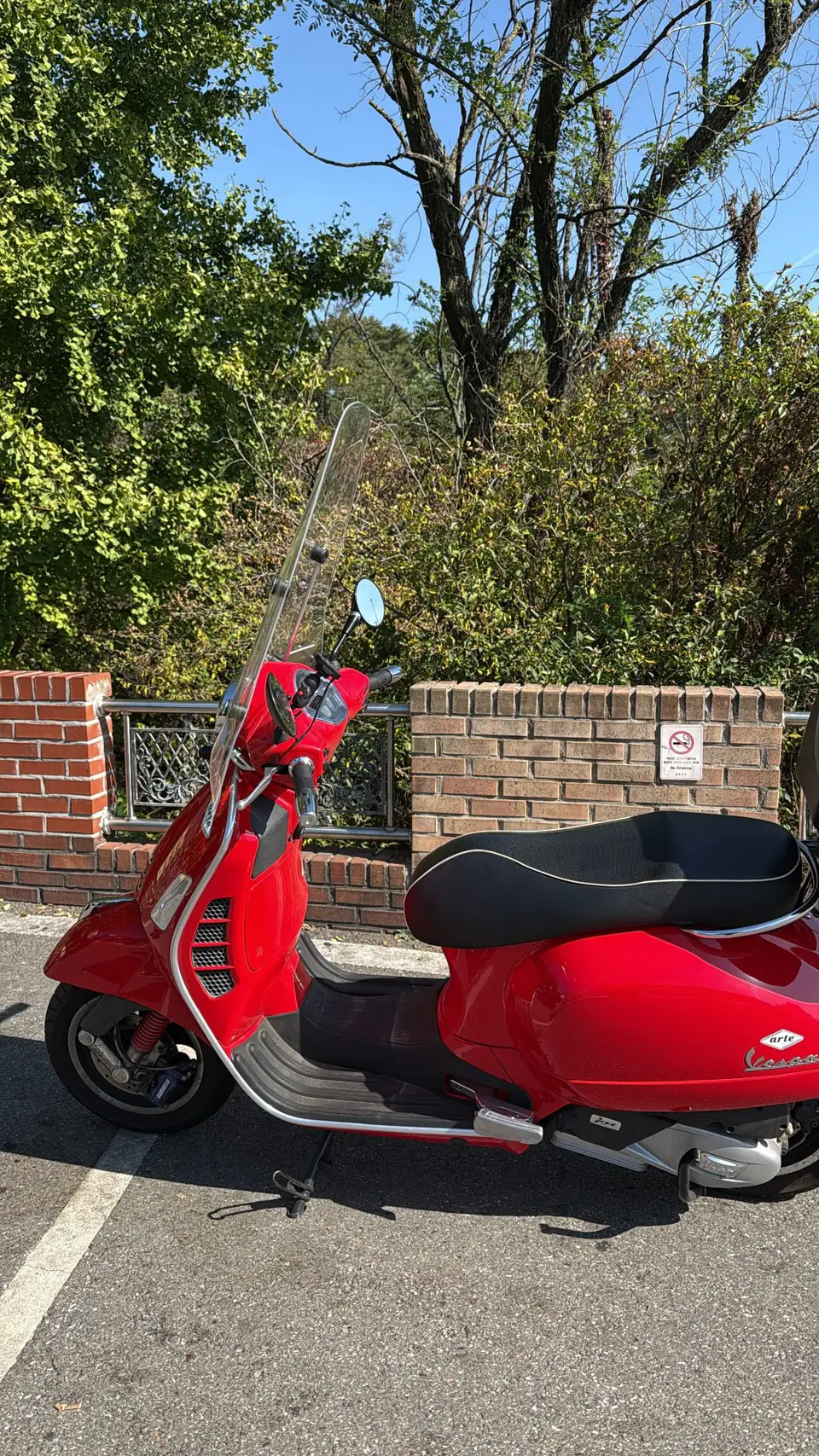
01 / THE BIKE
Not a current model: a 2021 rental bike.
The bike I rented from Artefine Yongsan Lounge (아르테파인 용산 라운지) was a 2021 VESPA GTS 125 SUPER. The rental page lists it at 14ps and as a two-seater, and Vespa’s official specifications from the same period give a 125cc engine, automatic CVT, a 790mm seat height and a 7L fuel tank.
| Model year | 2021 rental bike |
|---|---|
| Engine | 125cc single-cylinder |
| Maximum power | 14HP / 8,750rpm |
| Maximum torque | 12Nm / 6,750rpm |
| Transmission | Automatic CVT |
| Seat height | 790mm |
| Fuel tank | 7L |
| Brakes | 220mm discs front and rear, ABS |
The model year and rental details come from the Artefine bike page (Korean), and the specifications from Vespa’s official 2021 data sheet (Greek). Bikes on sale now may differ in equipment and specifications.
02 / EASY, WITH ONE CATCH
Starting off was easy; on the centre stand, I felt the weight.
Being a scooter, it moves as soon as you twist the throttle. With no gears or clutch to work, the first start itself wasn’t hard. While stopped, it never felt as if the bike was rolling much or unstable either.
ONE CATCH
More than when riding,
it was heavy coming off the centre stand.
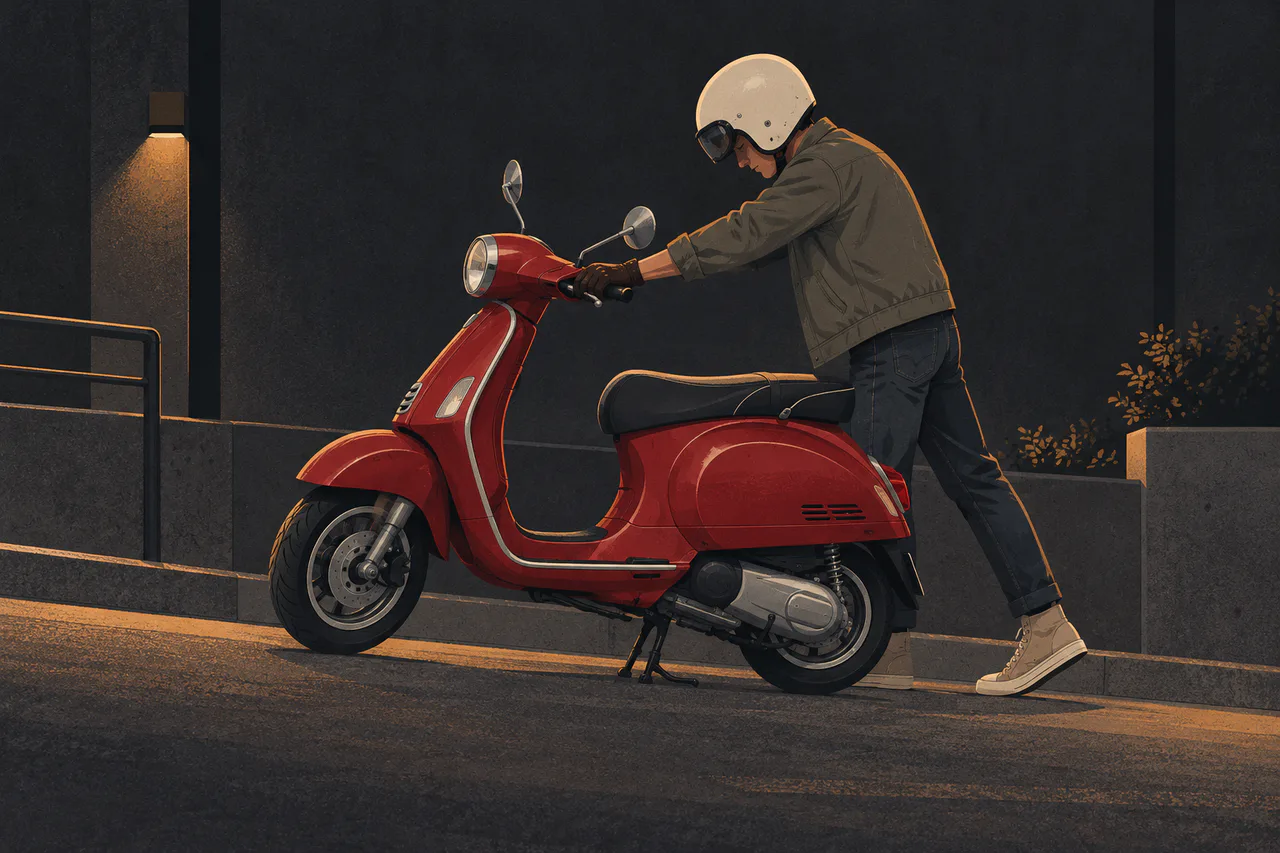
Putting it on the centre stand to park, and taking it off again to get ready to go, felt a little heavy. I actually saw another rider, who had parked on the centre stand on a slope, unable to get the bike down alone and asking for help.
So if you’re renting for the first time, don’t just learn how to move off: when you collect the bike, try putting it on and taking it off the centre stand yourself on safe, level ground. How it feels depends on your build and strength.
03 / CITY AND OPEN ROAD
Plenty in the city; from 90 km/h, less in reserve.
On this bike I saw about 100 km/h on the speedometer. In my experience it ran steadily at 60 to 80 km/h, and from 90 km/h to 100 km/h the speed didn’t climb quickly. This is not a GPS-measured top speed or a figure guaranteed by the manufacturer.
In the city and on hills, 125cc was enough. On open stretches, though, I wanted a little more power. If you’re new to riding, getting used to the bike’s acceleration, braking and sense of speed within the speed limit comes before finding its top speed.
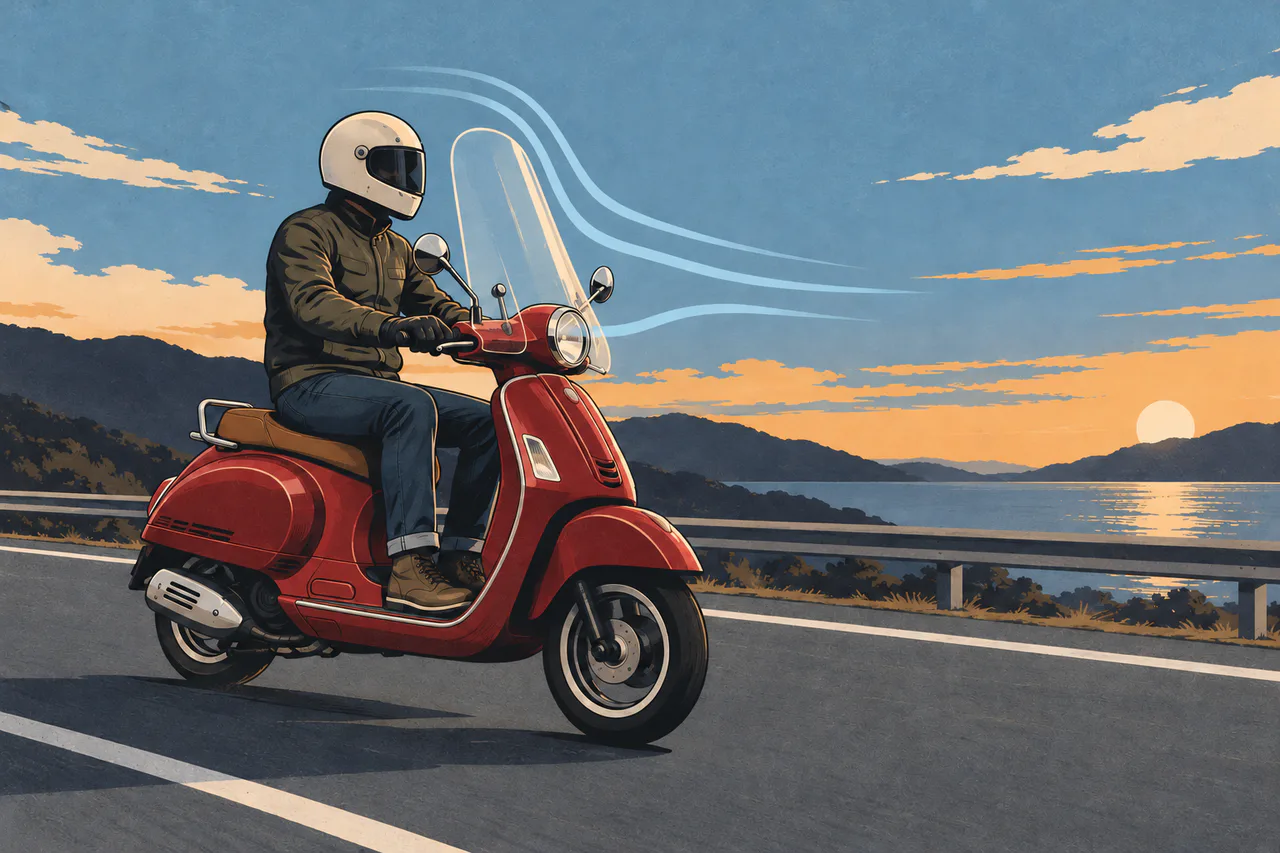
Behind the tall windscreen, I kept my body steady.
At higher speed, when I put a hand out into the airflow beyond the screen, the wind pushed it and I felt my body sway. Don’t test this while riding; it is safer to keep both hands on the handlebars and hold a steady position behind the screen.
04 / RIDE AND COMFORT
Stable on Bukak’s bends and rough surfaces.
On the bends of Bukak Skyway (북악스카이웨이) and its rougher surfaces it felt stable, perhaps because the bike has some heft. The ride was comfortable too, without harsh jolts coming through. An outside test ride of the same model year also names the roomy riding position and easy handling as strengths, but the judgement in this paragraph comes from my own experience on the rental bike I rode.
I actually rode for about 6 to 8 hours and had no noticeable fatigue in my backside, lower back or wrists. I did move around lightly and stretch at every stop, though. Fatigue over long distances can vary with build, posture, the seat’s condition and how often you rest.
05 / STORAGE AND CHARGING
Storage was useful, but heat and full-face helmets need a separate look.
The under-seat storage was enough for my belongings. After riding, though, the inside got hot. I didn’t measure the temperature, but I wouldn’t leave anything sensitive to heat, like food or electronics, in there for long.
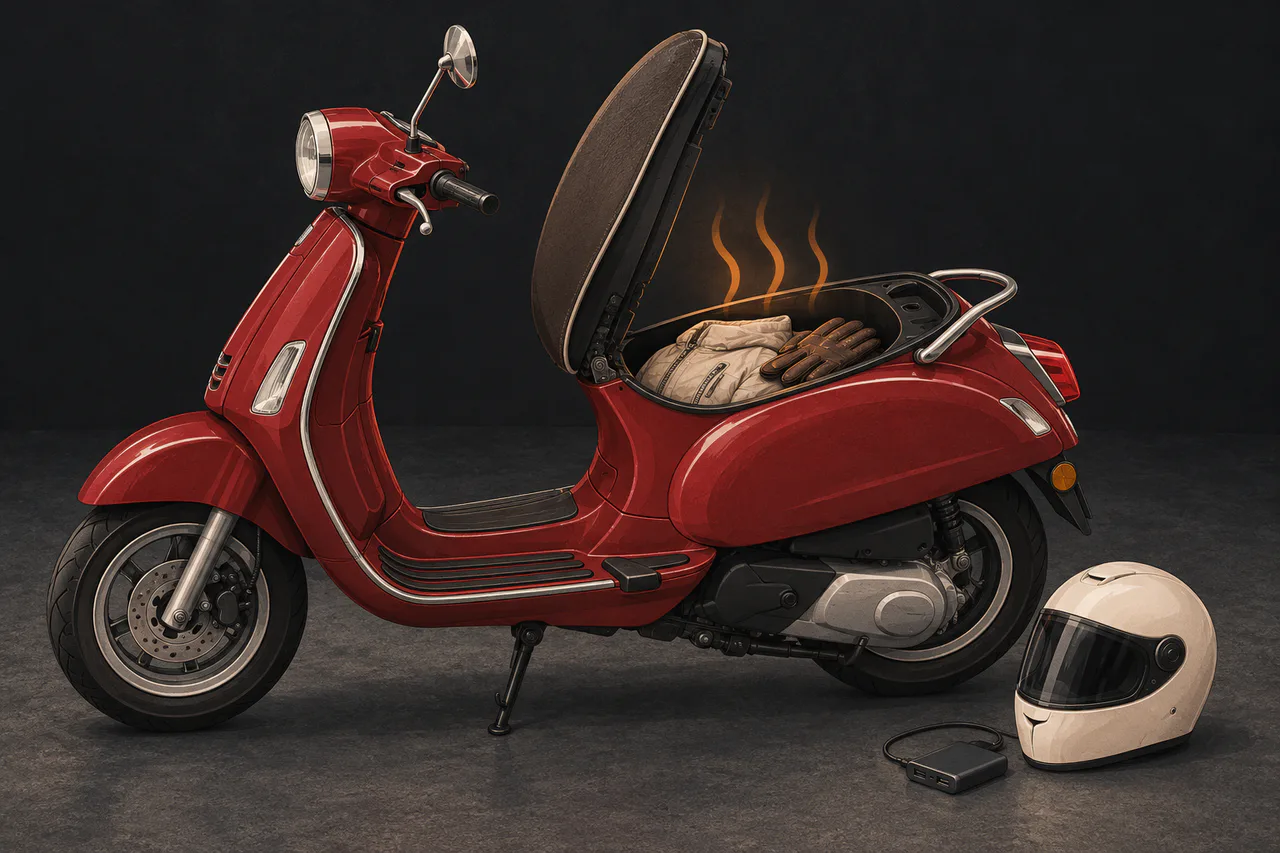
The full-face helmet I borrowed did not fit under the seat. Helmet sizes and storage shapes differ, so if you’re buying, the reliable check is to try your own helmet in it.
On this rental bike I couldn’t find a USB port and couldn’t charge anything. Some materials for the same model year mention USB equipment, but options, maintenance and modifications can differ from bike to bike. When renting, check the phone mount and charging power separately; bringing a power bank is the safer choice.
06 / MY PICK
If you want style and easy handling together, it was worth renting for a day first.
People sometimes say a Vespa is a bike you buy for its design and feel rather than performance. By my standard after a day of riding, the strengths were clear: easy starts, enough pace for the city, and little fatigue even over long hours. On the other hand, the weight on the centre stand, the shrinking acceleration reserve on open roads and storage that won’t take a full-face helmet are things to check for yourself.
People who like the Vespa design and want an easy start on an automatic scooter
If you ride in the city plus the occasional trip out of town, and count how riding feels, not just the spec sheet, as a reason to choose.
People who look first at price, storage, running costs and top performance
I only rented, so I couldn’t verify real long-term running or repair costs. If these come first for you, compare purchase price, insurance and consumables separately against a practical scooter such as the PCX.
In the end, my pick was to rent before buying. A day on a model I was curious about let me check what a spec sheet can’t tell you: the stand’s weight, the wind, the storage temperature and fatigue.